
Call 970-659-6140 to Schedule Today
DOT/CDL Physical Requirements
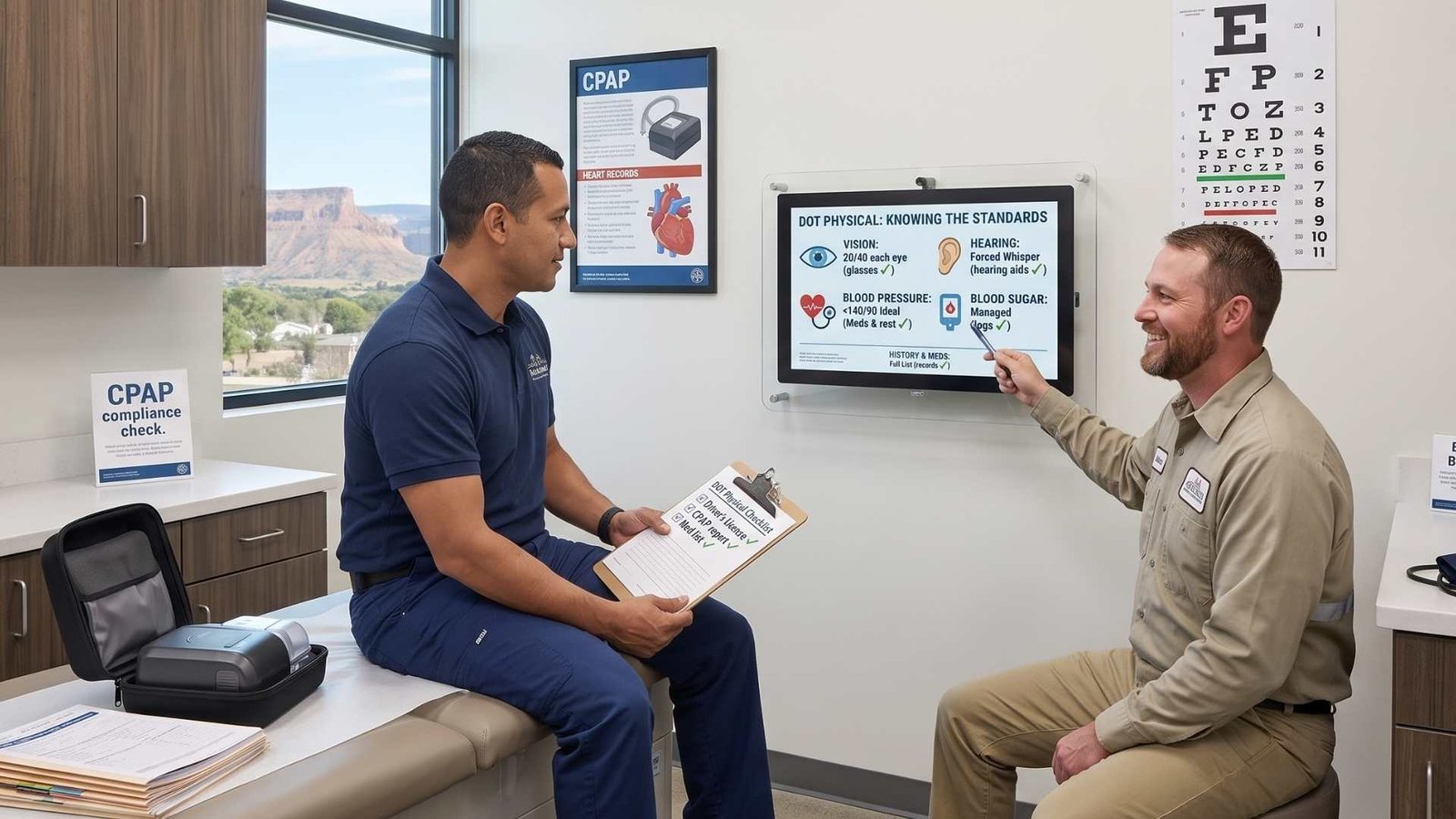
Wondering whether you'll pass? Most drivers do. The DOT physical checks a handful of specific things the FMCSA cares about, and none of it is a mystery. Here's exactly what gets measured and where the bar sits, so you walk in knowing what to expect.
Vision
You need at least 20/40 in each eye and both eyes together, with or without glasses or contacts. You also need a field of vision of at least 70 degrees in each eye and the ability to tell traffic signal colors apart. Wear corrective lenses? Bring them. If one eye doesn't meet the standard, there's an FMCSA vision process that can still get you certified.
Hearing
The bar here is simple. You have to hear a forced whisper from five feet away in your better ear, with or without a hearing aid. Prefer a machine? We can measure it with an audiometer instead, and you pass if your average hearing loss in the better ear is 40 decibels or less. Use hearing aids? Bring them.
Blood pressure
This trips up more drivers than anything else, so know the numbers going in:
- Under 140/90: good for the full two years.
- 140 to 159 over 90 to 99 (Stage 1): a one-year card, and you'll need it lower by your next exam.
- 160 to 179 over 100 to 109 (Stage 2): a temporary three-month card to bring it down.
- 180/110 or higher: not certifiable until you lower it, then a six-month card.
If yours runs high, skip the coffee beforehand, take your meds as usual, and give yourself a minute to sit and breathe before the reading.
Blood sugar and diabetes
Diabetes doesn't automatically disqualify you, even if you're on insulin. What matters is that it's well managed. Bring your recent A1c and blood sugar records, plus the assessment form from your treating doctor if you use insulin. Uncontrolled blood sugar is the problem, not diabetes itself.
Medications and medical history
The examiner reviews your medications and your history. Bring a full list with doses and prescribing doctors. A few medications need a quick note from your doctor confirming you're safe to drive on them. Got a heart condition, sleep apnea, or another monitored issue? Bring the records so nothing stalls your certification.
The exam itself
Beyond the numbers, the examiner does a hands-on check: heart, lungs, abdomen, reflexes, and overall condition. There's also a urinalysis that screens for things like protein or sugar. That urine test is not a drug test, so don't mix up the two.
What to bring (so you pass in one visit)
- Driver's license or photo ID
- Glasses, contacts, or hearing aids if you use them
- A complete medication list with doses and doctors
- Diabetes: recent A1c and blood sugar logs (plus insulin assessment form if applicable)
- Sleep apnea: your CPAP compliance report
- Heart or other conditions: relevant records or a specialist's note
Bottom line
Show up rested, bring your paperwork, and keep your blood pressure in check, and you'll almost certainly walk out certified. Unsure about a condition or a medication? Call us first and we'll tell you exactly what to bring.
Ready for your DOT physical in Grand Junction?
Call 970-659-6140